When a parent or spouse starts needing more help than family can comfortably provide, the search for care often turns up three terms that get used almost interchangeably: assisted living, nursing home, and memory care. They are not the same thing, and choosing the wrong level of care can mean paying for services your loved one doesn’t need — or moving them somewhere that can’t fully support them. For families here in Holladay and across Salt Lake County, understanding these differences early makes the whole journey calmer and clearer.
At Holladay Home, we’re a small, family-owned assisted living residence, so we talk with local families every week who are trying to sort this out. Here’s an honest, plain-language guide to what each option really means.
Assisted Living: Help with Daily Life, Not a Hospital
Assisted living is designed for older adults who are largely independent but need a helping hand with some of the routines of daily life. Think of it as support that preserves dignity rather than takes over. Residents typically get assistance with things like:
- Bathing, dressing, and grooming
- Medication reminders and assistance
- Meals prepared and served in a shared dining setting
- Housekeeping, laundry, and transportation
- Social activities and companionship
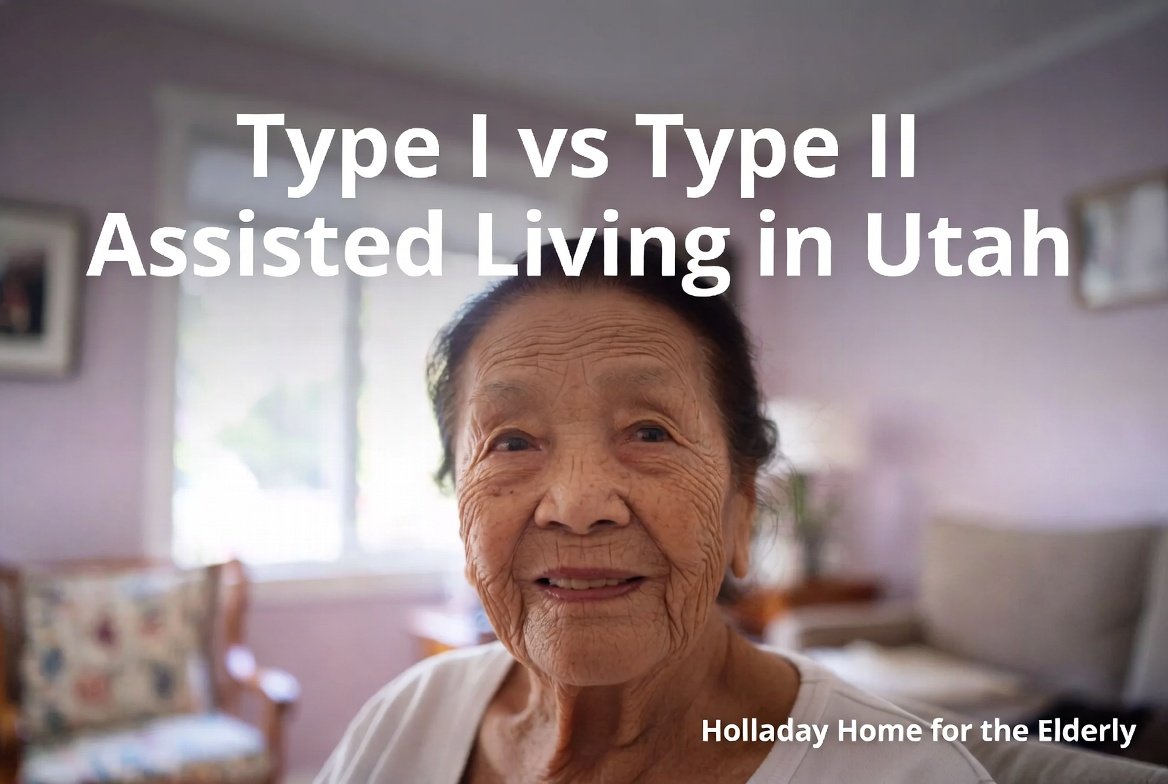
In Utah, assisted living homes are licensed by the state and come in two types. A Type I setting serves residents who are generally stable and mobile, while a Type II setting can care for people with somewhat greater needs. A small residential home like ours offers this care in a genuine house — not a sprawling facility — so the environment feels like home and the caregiver-to-resident ratio stays personal. Assisted living is the right fit when someone can no longer safely manage alone but does not need round-the-clock medical treatment.
Nursing Homes: Skilled Medical Care Around the Clock
A nursing home — sometimes called a skilled nursing facility — is a different level of care entirely. These settings provide ongoing, licensed medical care supervised by nurses and available 24 hours a day. Nursing homes are generally appropriate for people who:
- Have complex or unstable medical conditions requiring frequent nursing attention
- Need help with nearly all daily activities and mobility
- Require rehabilitation after a hospital stay, surgery, or serious illness
- Depend on medical equipment or treatments that must be managed by clinical staff
Because of the intensity of care, nursing homes tend to feel more clinical and typically cost more than assisted living. Many families are relieved to learn that their loved one does not yet need this level of care — and that a home-like assisted living setting can meet their needs while offering a warmer, more personal atmosphere.
Memory Care: Specialized Support for Dementia
Memory care is designed specifically for people living with Alzheimer’s disease or other forms of dementia. It focuses on safety, structure, and specialized engagement for those who may wander, become confused, or need extra reassurance throughout the day. Common features include secured environments, consistent daily routines, and caregivers experienced in supporting people whose memory and reasoning are changing.
It’s worth knowing that memory care isn’t always a separate building. In a small assisted living home like ours, many residents in the earlier and middle stages of dementia do very well, because the quiet setting, familiar faces, and consistent one-on-one attention naturally reduce the anxiety and overstimulation that larger environments can cause. Families dealing with dementia in Salt Lake County often find that a small home strikes the right balance between specialized attention and a comforting, non-institutional feel.
How to Tell Which Level of Care Fits
Every family’s situation is unique, but a few honest questions help point the way:
- What does daily life actually look like? If your loved one mainly needs help with bathing, medications, and meals, assisted living is often the right starting point.
- Are there ongoing medical needs? Frequent skilled nursing, wound care, or complex treatments may point toward a nursing home.
- Is memory the central concern? If confusion, safety, and wandering are the main issues, a memory-focused approach matters most.
- What kind of environment helps them thrive? Some people flourish in a busy community; many older adults feel calmer and more themselves in a small, home-like setting.
Needs also change over time, and that’s normal. A good care home should be able to walk alongside your family, adjust support as things evolve, and be honest with you if a different level of care ever becomes the right choice.
Finding the Right Fit in Holladay
Choosing between assisted living, a nursing home, and memory care isn’t just a medical decision — it’s an emotional one. The goal is to match your loved one’s real needs with a place where they’ll feel safe, respected, and genuinely cared for. For many Utah families, a small residential assisted living home offers exactly that: real help with daily life, delivered in a setting that still feels like home.
If you’re weighing your options for a parent or spouse in Holladay or anywhere in the Salt Lake Valley, we’d be glad to talk it through with you — no pressure, just straight answers. You can schedule a tour to see our home in person, or call us directly at (801) 277-8371 and you’ll reach someone who actually knows our residents by name. We’re here to help you find the right path forward.